The facade leaves as a finished panel, not a slab.
A ventilated stone facade is an engineered rainscreen, not a finish. We deliver the part that decides whether it lasts: the stone panel, selected at the quarry, machined to your anchor system, quality-controlled and crated per elevation. Your team owns the substructure and the install. We close the panel.
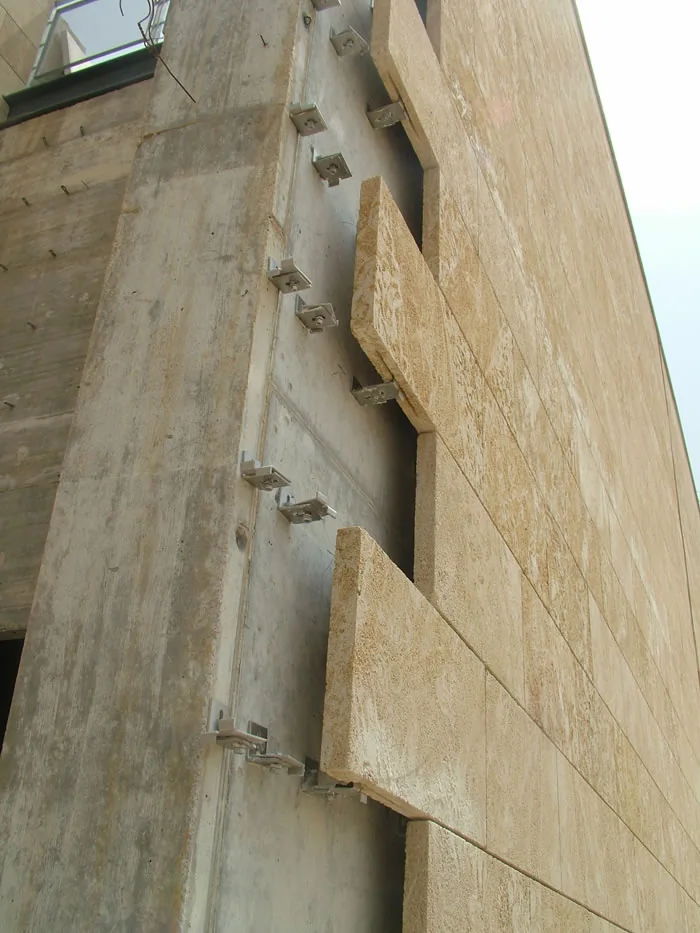
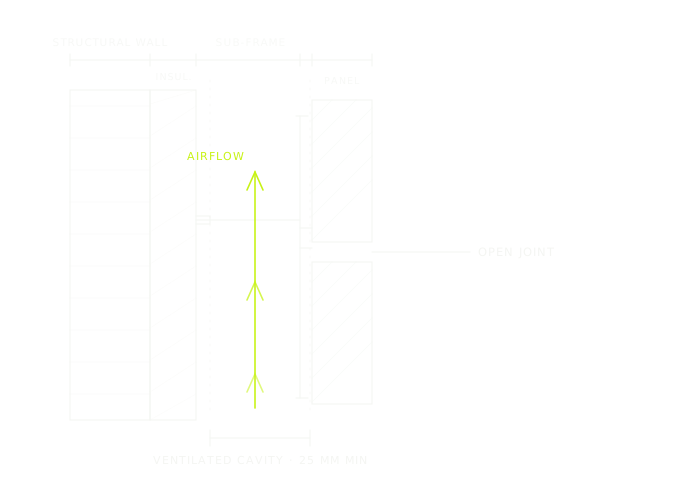
An outer stone skin, a drained and ventilated air cavity, and a sub-structure that carries every panel independently of the wall. The joints are open. Rain is screened, not sealed out. This is a rainscreen, and it is why it outperforms adhered or wet-set stone.
Stone is a reservoir cladding: it absorbs rain and stores it, then the sun drives that moisture inward. A wet-set or adhered panel traps that water against the wall. A ventilated cavity does three jobs at once. It drains the water that gets past the open joint. It breaks capillary contact between stone and wall. And it ventilates, sweeping moisture away so the stone dries from behind.
The result is durability the sealed approach cannot reach. In cold, wet climates a ventilated air gap is what prevents freeze-thaw damage to the stone. Across the wall it moderates temperature and pressure. Every panel can be reached and replaced without disturbing the rest. The cavity is not a detail. It is the system.
Horizontal section · cavity, sub-frame, open joint
DrainageWater is managed, not blocked.
The open joint lets some rain in by design. The cavity drains it, flashing pushes it out, and the wall behind stays dry. A single line of sealant has a long record of failing.
ThermalThe wall breathes and dries.
A ventilated gap (25 mm or more, open top and bottom) lets the stone dry from behind and moderates the inward vapor drive that destroys adhered stone over cooled interiors.
LongevityEach panel stands on its own.
Panels hang from anchors, independent of the backup wall. They tolerate building movement, survive freeze-thaw, and any single panel can be replaced without touching its neighbours.
Two ways we deliver it
Solid panels, or stone honeycomb.
The cladding can be solid stone or a lightweight composite. Both are real natural stone on the face. They trade weight, format and cost against each other, and the right choice depends on the building, not on a preference. Here is the honest version.
A · Solid stone cladding
Full-thickness panels on mechanical anchors.
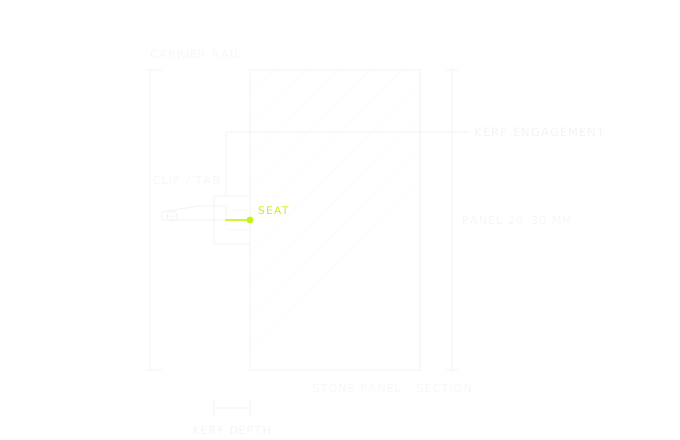
A solid stone panel, typically 20 to 30 mm thick, carried by kerf clips or undercut anchors that engage the edge or the back. No visible fixings on the face. It is the reference system for premium ventilated facades.
Kerf clips for edge engagement, undercut anchors for larger or heavier formats
The full depth of the stone reads in every reveal and return
Thickness sized to the wind load and the anchor, with material left around the kerf
Heavier, so panel size and substructure are sized accordingly
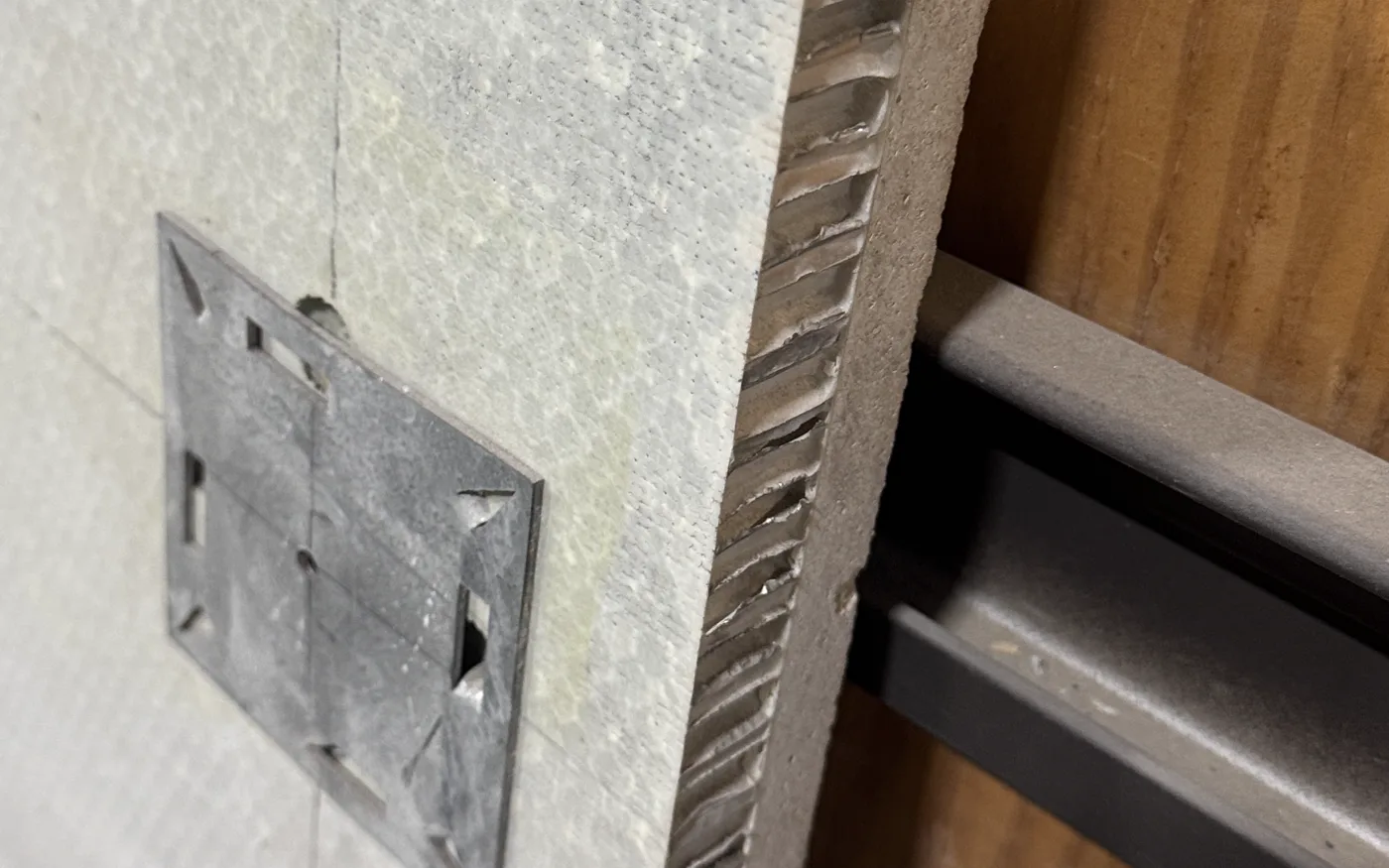
B · Stone honeycomb
A thin stone face on an aluminium core.
A natural-stone face of roughly 8 mm, epoxy-laminated to an aluminium honeycomb core. One slab yields multiple faces, the panel is a fraction of the weight, and large or curved formats become possible where solid stone would be too heavy.
A fraction of the weight, so larger panels and lighter substructure
Curved and oversized surfaces that solid stone cannot reach
More fabrication: two suppliers and a lamination step behind every panel
Engagement and edges detailed for a composite, not a solid section
The trade is simple. Solid stone gives you depth, mass and the longest track record. Honeycomb gives you weight, format and reach. We will tell you which one the building wants.
Where we fit
We deliver the finished panel. You own the wall.
The supply boundary is clean, and stating it plainly is the point. We hand over a machined, inspected, crated panel. The substructure, the anchors and the on-site install stay with your team. This honesty is the credibility.
ElementWhat it coversOwner
Stone selectionBlock chosen at the quarry, read for vein, tone and the flaws a photo hides.Alimonta
Panel fabricationCut to size, faces and kerfs machined to your anchor system, finished to spec.Alimonta
QC & cratingIn-person quality control, then crates mapped and zone-tagged per elevation.Alimonta
Anchor systemKerf clips, undercut anchors and their engineering. We machine to it; we do not supply it.Your installer
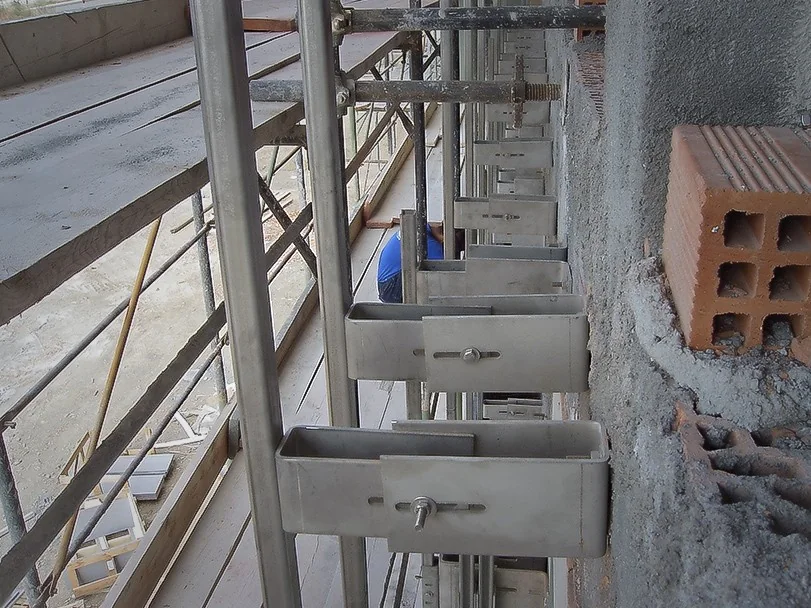
SubstructureBrackets, rails and the cavity build-up fixed back to the building.Your installer
On-site installSetting out, hanging the panels, sealants and final tolerances on site.Your installer
We machine the kerf and the panel profile to your anchor system, so we need to know that system before the stone is cut. Tell us the anchor and we build the panel to fit it.
Selecting the stone
A facade stone is qualified, not just chosen.
On a facade the stone is held at points and flexes between anchors under wind. The risk is not aesthetic, it is structural. We screen a material against the way it actually fails outdoors: bowing, freeze-thaw, low flexural strength, water absorption. We speak to the method and the tests, never to invented numbers.
C880Flexural strength, real thicknessHow the panel flexes between anchors under wind, tested at the thickness that ships. The number the engineer sizes the anchor against, and the one we want after environmental cycling, not just when new.
C99Modulus of ruptureThe class-acceptance flexural value used to screen a material before it earns a facade. Read alongside C880, never instead of it.
C97Absorption and densityThe first number we read. Low absorption means most outdoor risks, freeze-thaw and salt among them, quietly fall away. High absorption means durability has to be proven, not assumed.
C1528Exterior dimension-stone useThe guide for selecting stone for exterior application: matching the material and finish to the exposure, the climate and the way the panel will be supported.
BowingThermal hysteresis (marble)Calcitic marble can warp permanently and lose much of its flexural strength under repeated heat-and-water cycles. For an exposed marble facade this is the gate that is never skipped. No pass, no facade.
C1354Anchor pull-out in the stoneHow much load a single clip or anchor holds in the kerf or hole before the stone gives. It sizes how many anchors a panel needs, and the safety factor that protects the wall.
Coastal detailing is a different conversation.
On the ocean, salt drives the spec. Exposed brackets, anchors and fixings move to 316 stainless for its resistance to chloride pitting, and dissimilar metals are isolated to kill galvanic corrosion at the source. We read the test report against the real block and the real finish, because the stone that ships has to be the stone that was tested, not the type in general.
Anchor detail · kerf engagement
Why we are different
We close the panel chain. Most stop at the slab.
A facade panel runs through two suppliers: the quarry that yields the slab and the workshop that machines or laminates it. Most brokers hand you the slab and leave the rest to you. We hand you one finished panel.
01
We pick the block at the quarry.
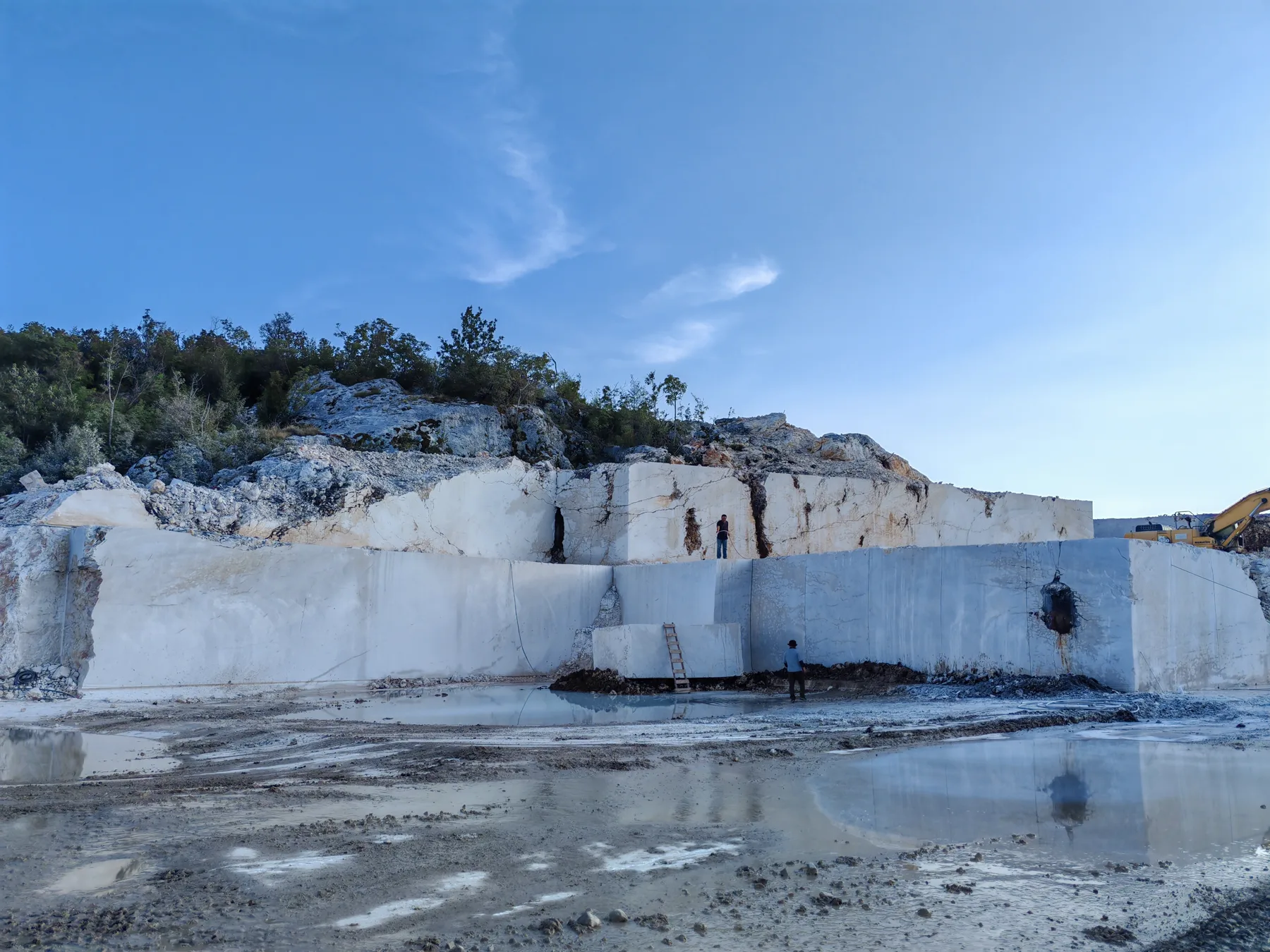
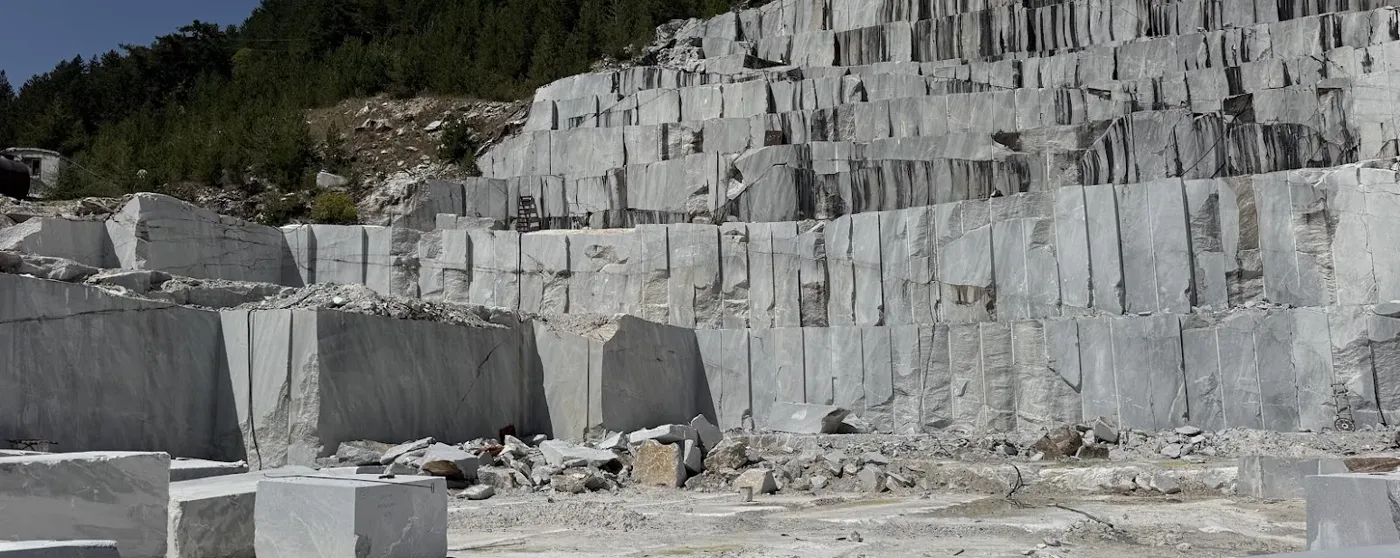
We get on a plane, read the quarry face, and choose the block in the light it was cut in. The block we choose is the block that ships. A facade lives or dies on consistency across hundreds of panels.
02
We close the two-supplier chain.
Quarry slab on one side, panel fabrication on the other. We run both and hand over a single finished panel, not a commodity slab and a problem.
03
Machining and QC, in person.
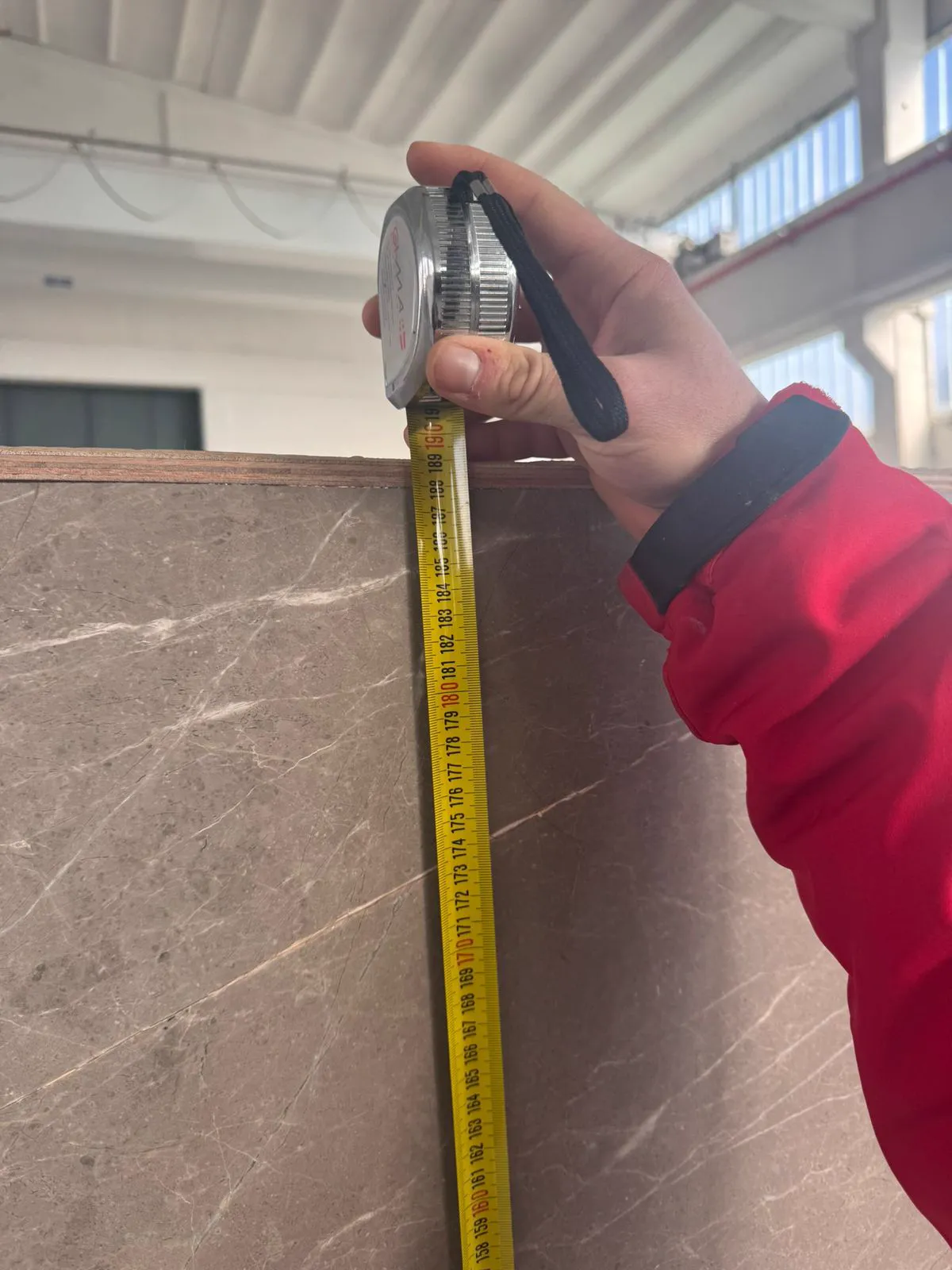
Faces, kerfs and profiles cut to your anchor system, then checked by hand before anything leaves: thickness, finish, vein continuity and lot consistency, documented.
04
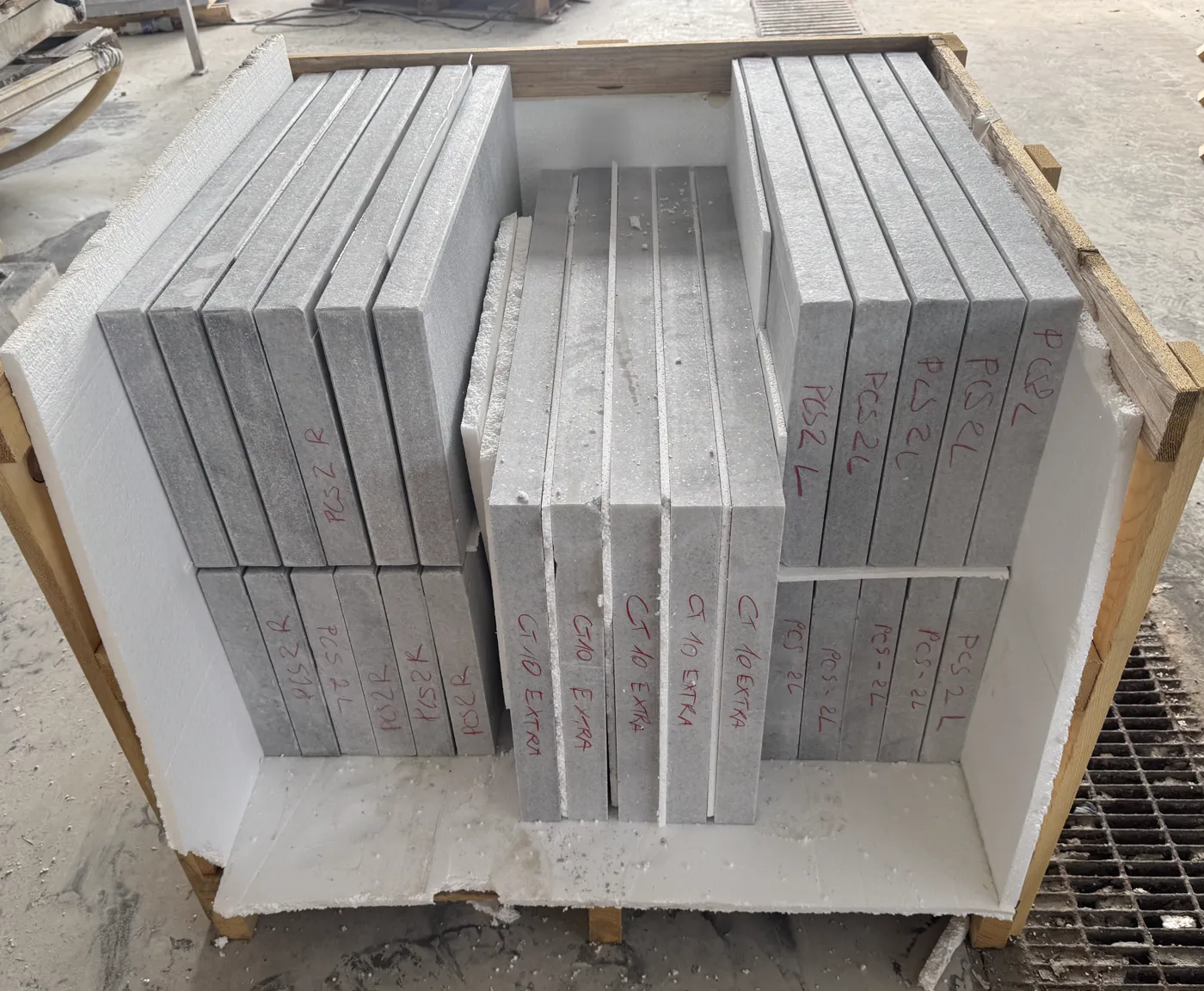
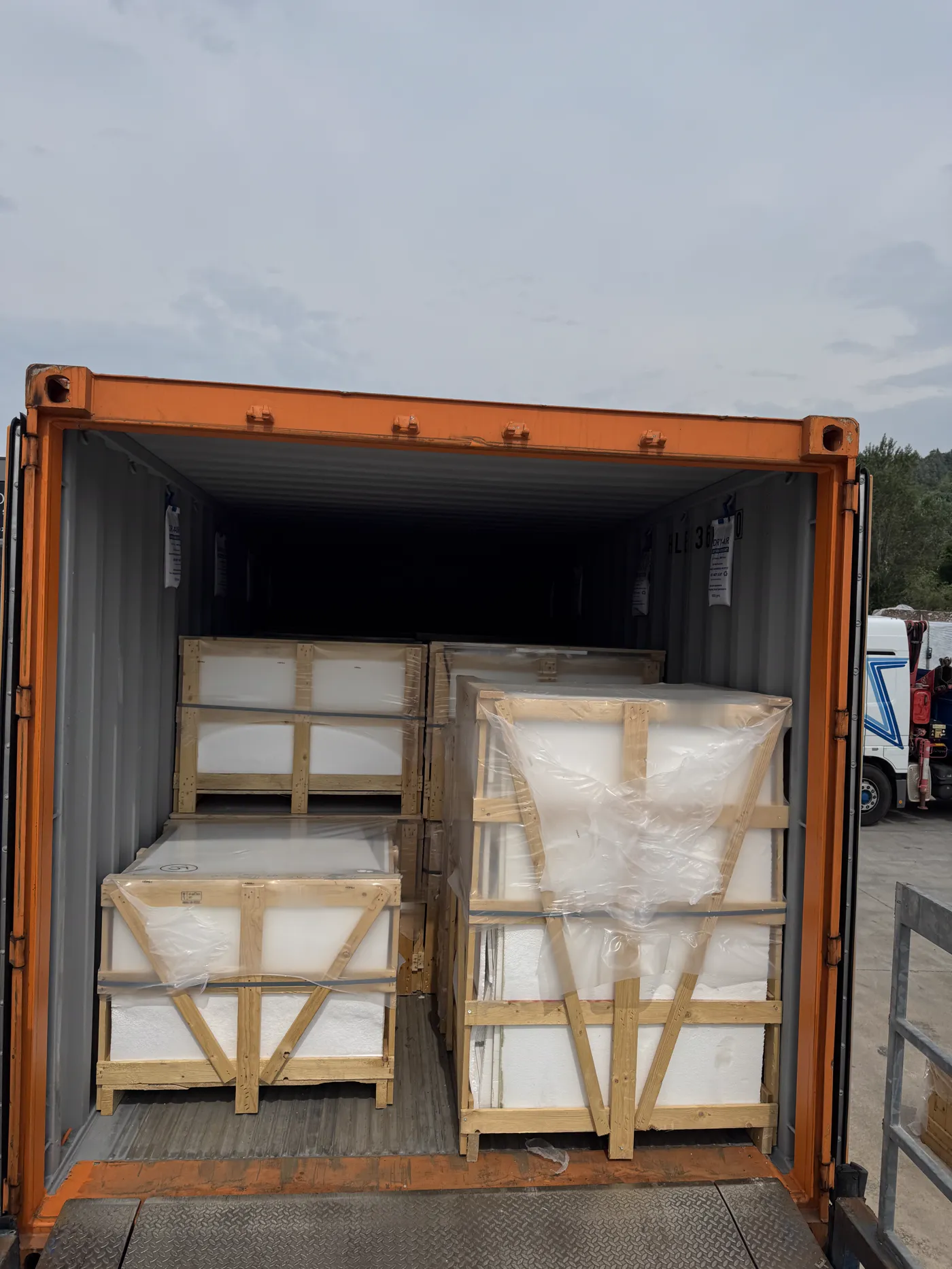
Crated as a kit, per elevation.
Panels arrive zone-mapped to the elevation grid, so the crew opens a crate and finds the run it needs. Install order, not transport order.
From net facade area to raw slab, then to a panel price.
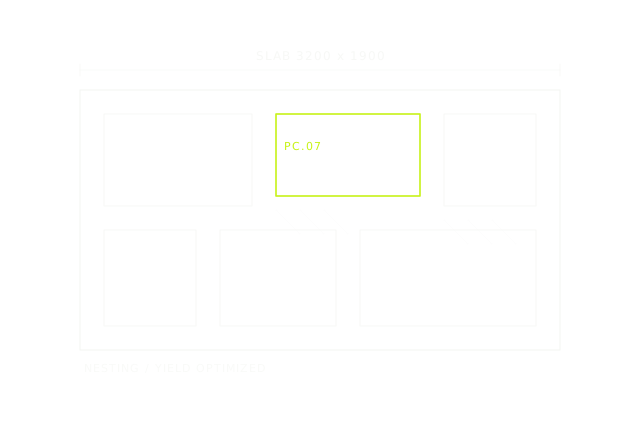
A facade is priced as a lump sum per finished panel, with freight separated, never as a flat rate that hides the fabrication. The take-off works backward from the wall to the stone that has to be quarried, on real sourcing rather than theoretical rates.
01 · Net areaNet facade area
The visible wall area to be clad, taken off the drawings and confirmed before anything is quoted.
02 · To raw stoneYield to raw slab
Net area converted back to slab to order, accounting for the yield of the chosen panel build-up and how the stone is worked.
03 · Loss factorsWaste and block quality
Fabrication waste plus the loss factor for that material and block, so the order covers what the workshop will actually consume.
04 · Lump sumPrice per panel, freight apart
Built up as a lump sum per finished panel. Ocean and inland freight stay separate line items, sized to real weight and format.
Honeycomb is light, so the constraint is usually crate volume and panel format, not weight or the container limit. Solid stone is the opposite. Either way the freight is sized to the real load, and the panel price stands on a sourcing route we can stand behind, not a rate sheet.
Real material
Documented from quarry to crate.
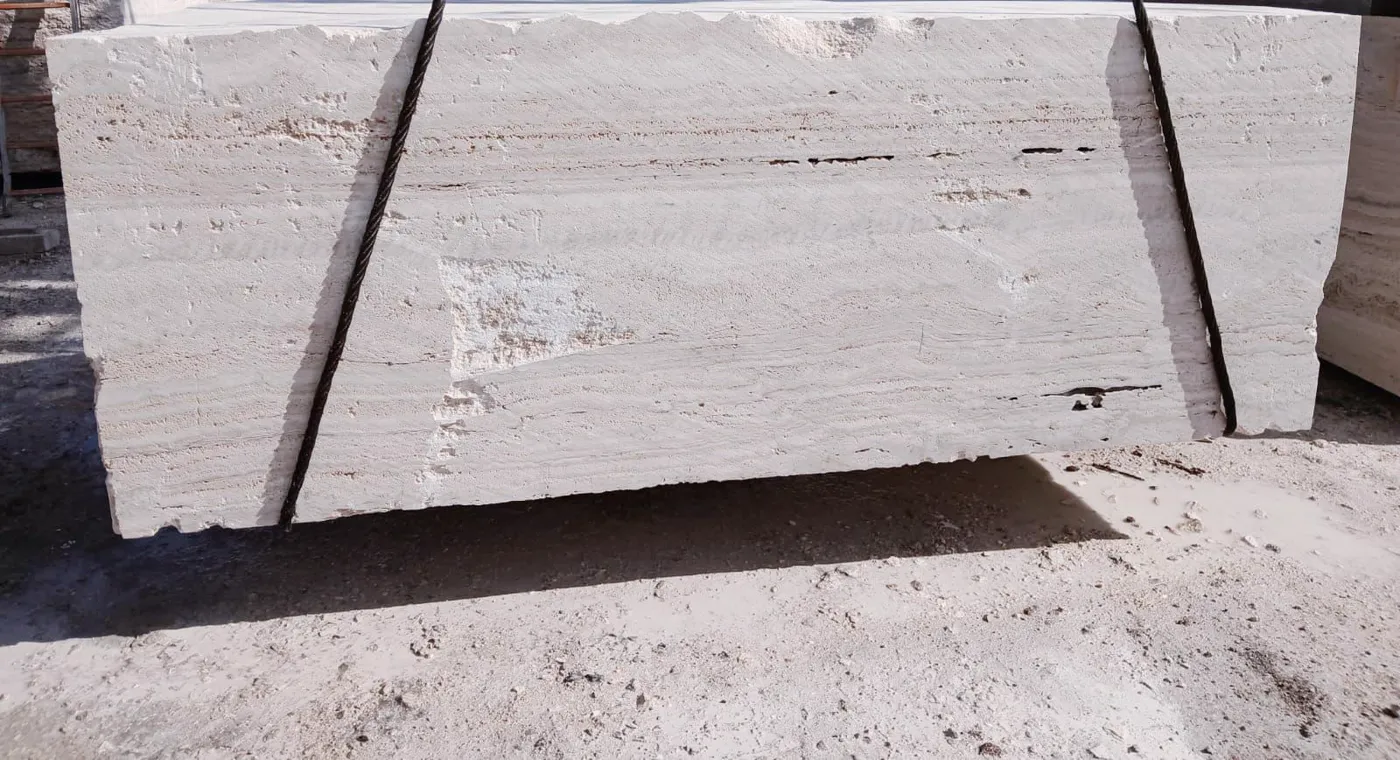
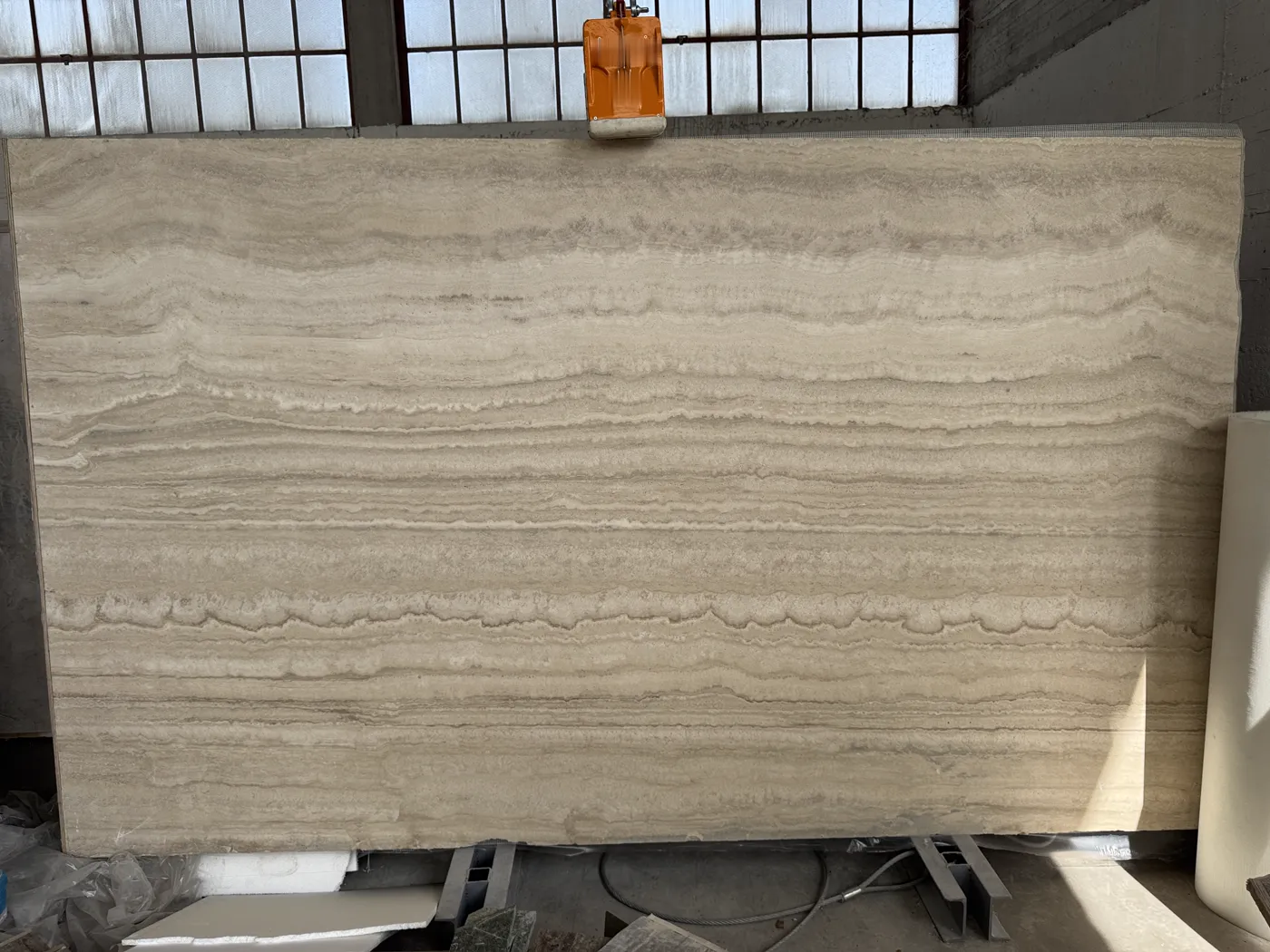
No finished-project photos. The work belongs to the contractor we built it for. What we show is material and process: the block, the face, the fabrication, the residence under construction.
Stone cladding · residence under constructionFabrication · machined to the anchor systemQuarry face · block selectionQuarry · block extractionCrating · zone-mapped per elevationQC · reading the material in person
Bring the facade
Send the elevations and the anchor system. We will build the panel.